






Personal Pieces posts
Wednesday March 13, 2024
Way to Be
The other day, walking around a city that is increasingly full of homeless drug addicts, Bob Dylan's “Tryin' to Get to Heaven” came on iPhone shuffle, and these words hit me in a new way:
When you think that you've lost everything
You find out you can always lose a little more
Chris and Jellybean last fall, Clem last month. And, as the man said, it doesn't have to end there. There's more to lose. “Not single spies but in battalions,” as another man said.
And here's yet another man, Craig Wright, who, the other day on his SubStack, gave us an ode to living with uncertainty and a warning about its opposite.
“...every time I've seen a properly sad and searching human being stop searching quite so desperately because he believes he's finally found enough of what he needs that he can rest his soul for a bit, I've seen those human beings lose some of their human being: most pertinently, their ability to listen. The machinery in them that used to be for listening gets repurposed...
”But I have some news for you, those of you who are (thankfully) still sad and searching, who don't quite believe what you believe and have no place to rest: you're supposed to be sad and searching and there's no time to rest. You're doing great! If you're doing your job as a real human being, the job should get harder. You should know less every day and move with ever more caution and quiet through a landscape about which you should be increasingly suspicious. That Grief that children (and inner children) want to flee should look bigger and more unjust as we grow in awareness, and nothing that claims to quell it should be trusted because that Grief is actually where the Hope and Love we need most to keep searching forever live.“
That is a balm to my soul—assuming I'm still a sad and searching human being, as opposed to just sad. Either way, it spoke to me. In a way, it was better than Dylan's or Shakespeare's lines. Theirs are basically ”Tough luck, kid.“ Craig's is ”Welcome to the party, pal," but he means it. He wants us at that party. Because the other party is just assholes.
I recommend the whole article. Pass along if you know someone who could use it.
Sunday March 03, 2024
Clem, Continued
How much does the ending dictate the story?
For a week I thought the story was this: a good-hearted couple doing what they could to help a newly adopted two-month-old kitten overcome dysentery and thrive and live a long life. They doubled their laundry load, put warm compresses to his backside, fed him medicines, bought him diet supplements, cooked him chicken and rice, and spent more than $3,000 on five vet visits over a eight-day period to make it right.
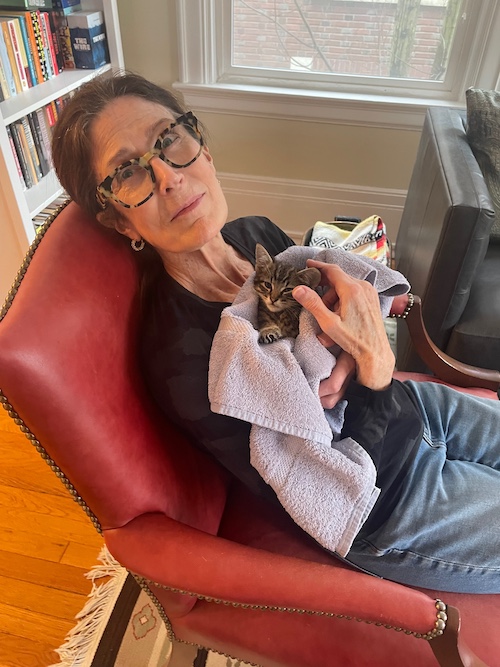 Now the story feels like: two dullards who missed the clues and let a small animal suffer and die.
The image I can't escape is one from his final full day. He had been eating well, and filling out a bit. But he'd already begun to leave wet spots and he was still walking slowly and creakily. Because his backside hurt, right? That's what I thought—incorrectly probably. This day, this Friday, he wanted to walk in the hallway outside our second-floor condo, as our cat Jellybean liked to do. And as with her in her final days, I accompanied him on the slow walk. But now I accompanied with a squirt gun. I'd bought the squirt guns in anticipation of teaching him bathroom protocol. He understood the litter box, but not always, but we assumed it was dysentery dicatating the mishaps, including the sudden peeing, and once he got over it, things would self-correct. But just in case, squirt guns. In the hallway, he huddled in a corner, his preferred place for peeing and pooping outside the box, and so I leveled it. In my head I was a responsible pet owner ready to teach bathroom etiquette to a kitten. In reality I was an idiot leveling a squirt gun at a kitten slowly dying from malfunctioning kidneys.
I didn't pull the trigger. But I can't get over that image.
During this messy week, many people suggested we give Clem back to Seattle Animal Shelter, where we adopted him on Feb. 13. He was too much trouble. A question in the adoption papers asked something like “What might make you return your pets?” and we wrote “Can't imagine.” Now we could. But that wasn't us. That's what I said to Patricia one of those nights: “We're not those people.” Now I'm wondering if it would've been better for Clem if we had been those people. Maybe they would've picked up on the clues in time.
I still wonder about all those vet visits. The regimen we went with was: five days of antibiotics, and if that didn't right things, an abdominal ultrasound. He didn't last the five days; he had one dose to go. The final vet said his kidneys seemed off, wrong, but no ultrasound or radiograph was done, per the invoice, so maybe she was guessing. At this place, at the outset, they let you know how much it might cost—the high end of it, Clem's was $5,936—and you pay that before they do anything. And if they don't need to do everything, you get what they call “a refund.” We got a refund. The only new item on the final invoice was euthenasia: $203.11.
Taken together, the vet diagnoses feel like a bad joke. Does he need more extensive care? Not yet ... not yet ... not yet ... too late.
Some of the real clues, including the sudden wet spots, didn't materialize until after the penultimate vet visit, but would we have known enough to tell them properly? You need a way to relay the facts to someone who has the knowledge to interpet the facts. We didn't have that. Clem didn't have that. Sadly, he just had us.
Wednesday February 28, 2024
Clemente ‘Clem’ Bradbury-Lundegaard (2023-2024)

Day 8
We didn’t even have him 11 days.
The day before Valentine’s Day, my wife saw a photo of two cats on the website of Seattle Animal Shelter (SAS), where she’s a volunteer dog walker, and gave me a look like a kid in a Lassie movie. Can we keep ‘em? Can we? He was a tabby with big, cute ears; his sister was a tortoiseshell. After our cat Jellybean died last December, we talked about how, next time, we’d get two cats, so they could keep each other company when we were away; so we wouldn’t worry they were lonely. These were those two, Patricia was saying. They were from the same litter, bonded, and sleeping together. Somebody had left them in a box on the doorstep of an animal shelter, and that shelter transferred them to SAS on Feb. 7. They were just two months old.
Though they were recovering from neuter surgery, SAS let us take them home that afternoon. They were tiny things—as light as dust bunnies, I thought—but the boy didn’t seem worse for wear. He left the cat carrier with a tough-guy walk and explored the joint like he owned it. He was mouthy, and if he wanted your attention, and your back was turned, he’d scramble up your body like Spider-Man, then perch on your shoulder, meowing.
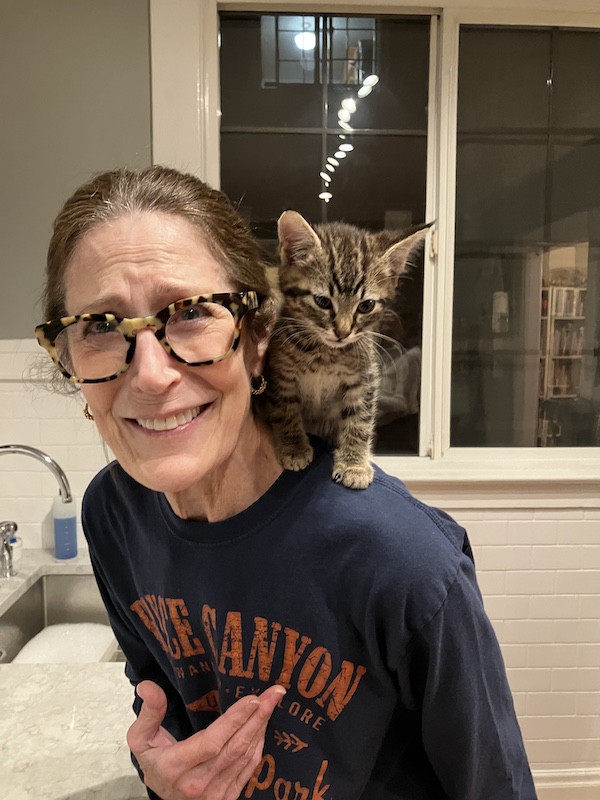 “Right now it’s endearing,” Patricia said with a laugh that first night.
For those first few days, I was a little out of it. As we sat at SAS filling out the paperwork, what was initially sniffles got worse. I’m guessing it was just a bad cold—all my COVID tests were negative—but I missed some of what was going on.
Patricia floated the idea of naming the girl Daphne, and I was an immediate no. “Why?” she asked. Overhearing, the SAS woman taking our information said, “And you can name the other one Fred!”
“That’s why,” I said. “‘Scooby Doo.’”
Eventually Patricia landed on Maisie for the girl. I forget what other names she’d floated for the boy but I kept shooting them down and she kept pestering me for a replacement. One morning, she asked while I was at my computer, and I had the Baseball Reference page up, with its revolving photos of ballplayers in the upper left hand corner.
“What about Clemente?” I said.
“Clem!” she said. “I love it!”
“Clemente.”
“Clem.”
At this point I was more worried about the girl. Clemente had his tough-guy walk and seemed more athletic. He was able to jump onto the bed, for example, while she had to find a foothold and do it in stages. The bed thing didn’t last long anyway. Though they understood the litterbox idea, one of them wound up pooping on the bed the first night. Worse, it was a little loose, a little runny. And it kept happening. The second or third night, Patricia thought that if she slept on the floor, next to their cat bed, they’d be that much closer to the litterbox in the bathroom and use it. Nope. In the morning, Maisie jumped onto the bed and peed near my pillow. That was that. We became a closed bedroom door family, and they would sleep in the heated cat bed out in the living room. Once we got the diarrhea problem under control, we thought, we’d work on bathroom protocols.
That was a common refrain: Once we solve this, then that. We didn’t know we would never solve this; we didn’t know we’d never get to that.
* * *
On the first Wednesday, Patricia bought a pumpkin supplement from Mud Bay, and a day later picked up cat food and a probiotic from SAS, all to help with the diarrhea problem. But whose problem was it? We had just the one litter box and didn’t know whose stools were getting firmer and whose weren’t. But we had our guess. Maisie was filling out, Clem wasn’t.
“Is he not eating?” I asked.
“He is,” Patricia said. “Just as not as much as she, I guess.”
SAS told us to have them checked out by a vet within a week but they didn’t tell us how to get the vet appointment. Our old vet, Four Paws, wasn’t taking new customers—new animal customers—so Patricia asked around and went with Jet City Animal Clinic, which was nearby, but the earliest appointment she could get was Monday, February 26—two weeks from when we got them. And with the way Clem was going, that seemed too far in the future. He needed help now. So on Friday Patricia made an appointment for the following Monday. By Saturday morning, he was so thin that the following Monday seemed too far in the future. So she took Clem to Urban Animal on Capitol Hill, which was open on weekends, and where subcutaneous fluids were given, and blood and fecal tests taken.
On Sunday, while Patricia was away, I googled his symptoms and wondered if it wasn’t worms or parasites. I was texting her my theories, while Clem lay on a heating pad in the window seat in my office. Then he went over to the sleeping bag in the corner. Was he squatting? Peeing?
He was shitting. Almost liquid.
“No no no no no no,” I said, picking him up, and holding my free hand under him as I ran to the bathroom and the litterbox.
“The pumpkin is doing nothing,” I texted Patricia.
To friends I began quoting Kurt Vonnegut’s brother, Bernard, who, after he became a father for the first time, wrote to Kurt: “Here I am, cleaning shit off of everything.” We were in the laundry room a lot. We began to use a separate bag for shit-stained items.
The fecal test came back negative for parasites, while the blood tests were a bunch of numbers—we didn’t know what they meant. But the vet at Jet City—our Monday appointment—took one look at them and said: “He needs an IV.” He recommended a couple of places. BluePearl was within walking distance from our condo.
And the vet there said, no, Clem didn’t need an IV.
Patricia exploded. Patricia never explodes. But this was her third vet trip in three days and we weren’t getting any closer to a solution.
At least they gave us a gameplan. The diarrhea might be viral-related, the vet said, and recommended a regimen of oral liquid antibiotics. She showed us how to administer them: hold the cat firmly, cheeks back, then edge the syringe toward the side of their mouth until it opened. I got fairly adept at it.
In a follow-up email explaining the blood numbers, Saturday’s Urban Animal vet seemed to agree with the BluePearl vet:
For the most part, this bloodwork is normal for a kitten of this age. The SDMA result is difficult to interpret since this kitten is so young and there is no accurate reference range.
The potassium is mildly high and can be seen with kidney disease, but in Clem's case the kidney values are normal. In some cases parasites can cause an elevated potassium. The significance and the cause of the mild elevation in potassium is not readily seen from the bloodwork and fecal at this time.
If Clem Fails to gain weight, I would consider other diagnostics such as abdominal ultrasound.
By Wednesday, Clem’s stools were getting bloody. When I patted his butt with toilet paper after he pooped—a necessity with the diarrhea—it came away with less poop and more blood. And his anus was … was it supposed to look like that? Patricia called it distended. When the BluePearl vet gave us a follow-up call, and we mentioned all of this, she recommended a return visit.
Again, the IV route was discussed, and again it was rejected. A normal PCV or Packed Cell Volume, was 30-35, she said. His was 38: elevated but not dangerous. If it was above 42 she would recommend hospitalization. All his other labs were within the normal range, too. She gave us prescriptions for two anti-diarrhea meds, both orals, meaning by Thursday poor Clem was taking seven different oral doses a day. We also switched his diet. Both the vet, and a friend, had recommended chicken + rice for animals with diarrhea. And holy crap did he like it. He attacked it. He ate like a champ. It warmed Patricia’s heart.
And for a day and a half he filled out. His stools were still slightly soft, with blood snaking through them, and his butt still sore, but he seemed to be getting better. Didn’t he? Per the vet’s instructions, I also began putting a warm compress on his backside for about a minute or so. He didn’t seem to mind this. Maybe it felt OK. Maybe it was because we were doing it in the bathroom sink, and he had a fascination with sinks. Most of his feedings now took place on the kitchen counter—to keep his food separate from Maisie’s—and afterwards he’d stroll over to the sink, where I might be washing dishes, and just stare, fascinated. When the water was turned off, he'd climb down and nose around.
But this was him at his most curious. After a meal he would normally crouch at the edge of the counter and stare down. To Maisie, the world was a toy. She zipped, batted things, chased sparkle balls. He wasn’t doing any of this. And his tough guy walk had become a stiff-legged gait—we assumed because of the distended backside. Once he got past it, we thought, he’ll be OK.
Once that, then this.
He was in my thoughts all the time. All of this happened during the Seattle International Film Festival’s Noir Festival, to which, several weeks earlier, I’d bought a pass. But between my sickness and Clem’s, I didn’t use it much. I went Tuesday night (“Black Tuesday” with Edward G. Robinson) and then again Thursday night (“La Bete Humaine” with Jean Gabin), and I was thinking of staying for the second and final feature. But I was too tired and I wanted to see how Clem was doing. A drink maybe? No, I was too tired and I wanted to see Clem.
When I called my father and step-mom during a late Friday afternoon walk, I went through the trials and tribulations of our week. What a shame, they said, that we couldn’t enjoy the fun and kittenish moments. “I don’t know,” I said. “When we first got them, and our friends came over to coo, etc., I wasn’t feeling it. It wasn’t until all this happened that he really entered my heart.”
Besides, I said, we were on the upswing. We were beginning to get past it.
* * *
When I got home, he was laying on the window seat in my office. I kept an eye out so he didn’t poop again but missed it when he left a big wet stain near the window. The night before he’d driven Patricia batty by suddenly peeing in the pantry. “What are you doing?” she’d admonished. But that pee didn’t smell like pee. Neither did this.
“Doesn’t he seem thin again?” Patricia said. “Yesterday, he was eating a lot and his tail was up. Now…”
“And we’re down to one antibiotic dose.”
That night he stopped eating. He stopped drinking. He didn’t look comfortable and couldn’t get comfortable. He’d stay in my lap a few seconds but would move off, and crouch nearby. In the kitchen I watched as he bent over his water dish, put his mouth close, and just stared.
“Maybe we need to go to the vet again?” I said.
“I don’t know,” Patricia said.
Another vet trip so soon seemed like a lot for him. I thought I might be overreacting. “Let’s see how he is in the morning.”
I woke up at 4 AM with a panicked thought: What if the wet spots that didn’t smell of urine weren’t urine? What if something inside him had broken? I found him, not in his bed, but sitting in the dining room, like he’d never gone to sleep, like he couldn’t get comfortable enough to go to sleep. BluePearl, it turned out, was closed weekends, but there was a clinic in Shoreline—the place that had diagnosed Jellybean’s cancer last September. I phoned, and they picked up right away. Patricia joined me in the kitchen as I explained to the clinic what was going on. We left shortly after 5 AM.
“Am I overreacting?” I asked.
“I don’t think so,” Patricia said.
At the vet they took Clem in his cat carrier and told us to wait in the lobby. We waited. And waited. And then, in a separate room, the vet, Dr. A., told us they’d run a test and didn’t like the looks of Clem’s kidney. She said we had two paths. One involved stabilizing Clem and then running a battery of tests.
And the other? I asked. She paused, and looked delicately at us.
“First option,” I said.
After another half hour or so in the lobby, the nurse came out with an update. Did they know what the problem was?
No. They couldn’t even stabilize him. They were losing him. They recommended we say goodbye.
Like that.
We found him in the back room lying on a table, an IV tube in his little leg. We could see his belly going up and down rapidly. Dr. A. tried to explain how euthanasia worked—the first shot to relax him and put him to sleep, and the second shot to…
We know, we said. We’d just been through it.
* * *
Our apartment at 9 AM felt eerily empty and calm, and we both tried to deal with it however we could. I went into my office to write it all out; Patricia went into the kitchen and began throwing away leftover medicines and syringes. She did the laundry with the pooped-stained towels. She was cleaning it all out but there was no cleaning it all out or writing it all out. It just kept hurting.
I don’t know how it felt to Maisie. I don’t know how she misses her brother. We just know she hasn’t slept in their bed since. The point of the two cats was to make sure they wouldn’t be lonely when we were away, but I wonder if we made sure a part of her would always be lonely.
I now assume it was acute kidney failure: the lethargy, the stiff gait, the sudden peeing that didn’t smell like pee, all are indications—I read that day—of kidney malfunction. But why didn’t it register in the tests? Did he arrive with it and it got worse? Was it a consequence of the week-long dysentery and dehydration? Or did the infection that caused the dysentery—if an infection caused the dysentery—travel to his kidneys?
We don’t know. I just know he got a raw deal. Everybody let him down—starting with SAS. They were bad partners. Both kittens were neutered the day we picked them up, and they were supposed to come with cones, and didn’t. Nobody even mentioned it. It wasn’t until Maisie’s stomach became distended that Patricia brought her back and demanded to see a vet. That was on the same day Clem returned to BluePearl for his penultimate vet visit. Because the cat carrier was at SAS, for Maisie’s re-surgery, I had to take Clem there in a tote bag. And then I had to take him home in a cardboard cat carrier they provided. He’d already beshat it and himself when they handed him over. He was such a mess we had to wash him in the bathroom sink at home. Another indignity.
Mostly I think of those oral meds I gave him—particularly the anti-diarrhea one he hated—all of which did nothing. “Sorry, buddy,” I’d say, “but this’ll help you get better.” The last dose I gave him was around 6 PM Friday. Afterwards he gave me such an exhausted look, it nearly broke my heart.
“Sorry, buddy,” I said. “But we’re almost done with it.”
We had him fewer than 11 days. He had fewer than 11 weeks.
Xoxo

Day 1
Saturday January 20, 2024
61*
This was part of an exhibit at the Walker Art Center in Minneapolis that we saw last August, in what I now think of as the before time, and I was amused by how it went up to the day before my birthday and just ended.
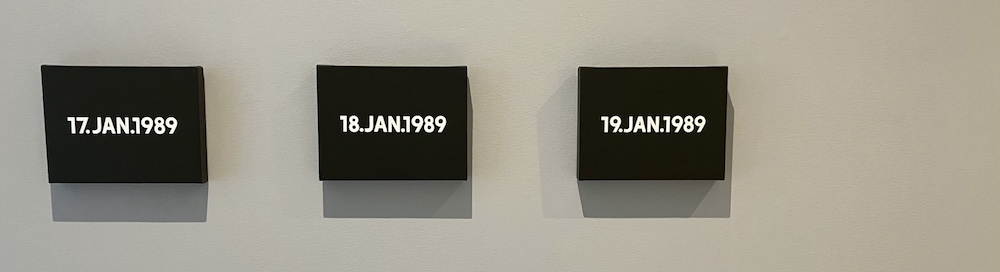
Was the artist commenting on the final days of the Reagan presidency? Hadn't thought of that—oddly, since I'm all about the politics, and if anyone knows when Inauguration Day is, it's anyone born January 20.
Today is my first birthday without my brother. Last night I dreamed we were sharing a prison cell, and I felt kind of safe, but then in the middle of the night someone broke in. They were a slow heavy presence, on top of me, and I felt weak and ineffectual, and I kept trying to wake Chris up. But he didn't wake up. A little on the nose, unconscious.
Saturday January 13, 2024
Billy Bob and Me
Someone telling you that the pain you're feeling, that bone-deep psychic pain, won't ever go away? Well, generally that's not something people find comfort in.
I've slept poorly now for several years, it's not just a consequence of my brother's death two months ago, and one day last week it was the usual 2:30 AM wake-up call without being able to return to sleep. So I went online. By happenstance I came across a post on Threads in which Billy Bob Thornton talked about the death of his brother, who was young, in his 20s I'm guessing. I'm guessing it was several decades ago. And he says this:
Yeah, I've never been the same since my brother died. There's a melancholy in me that never goes away. I'm 50% happy and 50% sad at any given moment. And the only advice I would give to people for when you lose someone is: You won't ever get over it. And the more you know that, and embrace it, the better off you are.
You grab comfort where you can. For whatever reason, during this awful time, Leonard Cohen's music helped. “The World According to Garp” helped. And this helped. A lot. Afterwards, I felt less alone.
Sunday December 31, 2023
Eulogy for My Brother
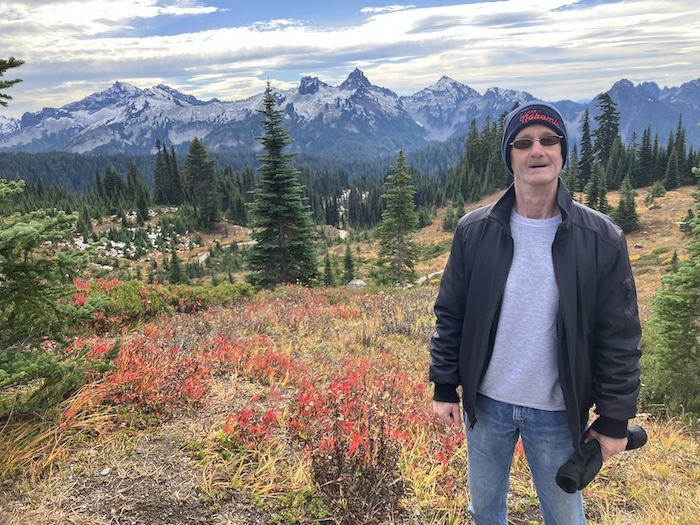
Here is the eulogy I delivered for my brother at his memorial on December 27 at Lakewood Chapel in south Minneapolis. I wish it had been better. I couldn't get at how much it hurt and still hurts. I've spent a lifetime writing but I don't have the words.
In the summer of 1973, our family was out on the east coast for two months—an eternity when you’re a kid—and for much of it we stayed at our grandmother’s house on Cedarhurst Road in Finksburg, Maryland. Yes, it was like it sounds. She lived on a long, long block without sidewalks, and without many people, and definitely no kids. So what did Chris and I do? We set up a Kool-Aid stand. We didn’t understand why nobody came. We weren’t exactly Business 101.
 One day Grammie sent us on an errand to the corner grocer. On the way back we were goofing around, swinging the loaf of bread like it was a baseball bat. And in the middle of one swing, the bottom of the cellophane bag ripped open and bread … went … everywhere. We tried to gather up the slices, but they were dirty now, and the bag was torn, and we couldn’t make it right again. I was usually someone who didn’t get into trouble so this was new territory for me, and I began to cry. Chris always got into trouble, he was used to it, so he knew what to do: lie. Remember what awful businessmen we were? Well, we were worse liars. Our lie was: We were walking, and suddenly the bag burst open. Yeah, nobody bought it. A few weeks later, after visiting friends and relatives in other states, we returned to Grammie’s. It was raining—a huge summer downpour. And as we turned onto Cedarhurst Road in Finksburg, Maryland, Chris, with a thick-as-thieves gleam in his eye, whispered to me: “Look out for soggy bread.”
I’ve read somewhere that the measure of a good sense of humor is the distance between the setup and the punchline. If so, this was world-class. He was 12.
That’s a shared experience, a shared memory, I had w/Chris. Last month, it became singular. I’m sure there are a lot of shared memories in this room that became singular that night.
He was athletic and I was not. He could do handstands and cartwheels. We went to a day camp, and there was archery, and I couldn’t hit the target while Chris won ribbons. I think our parents signed me up for wrestling because he had done so well with it. I lasted one match, about 10 seconds, in second grade. Chris wrestled through high school.
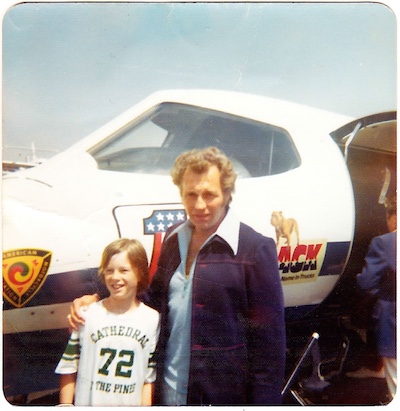 Then there was Evel Knievel. We went to see the biopic starring George Hamilton at the Boulevard, and afterwards Chris was inspired. At first it was enough to catch air on his sting-ray bicycle. Then he jumped over stuffed animals. Soon he got the kids in the neighborhood to lie down on the other side of the ramp and he would jump over them. Until the first parent looked out the window and saw what he was doing.
He was better at confrontation. He fought bullies for me. At the same time, he seemed to be holding onto parts of his childhood. He wanted the crust cut off the bread until he was …8? He carried around a blanket. It had once been a big blue blanket, but by the time I knew it, it was just this gray rag. All the adults tried to get him to give it up, probably in ways that were not helpful, but he held onto it. He had trouble throwing things away.
By high school we were drifting apart. I was becoming more of an introvert, he an extrovert. He’d always liked performing: Children’s Theater, “The Crucible” at the Guthrie, Shaun Cassidy at Millwheels. He wanted to be a rock star, and sang along to The Who, and Sabbath, and Zeppelin, on our father’s stereo. He got so good at Shaun Cassidy that when we visited our sister and mother—living in Timonium, Maryland, after the divorce—one of Karen’s friends got Chris on the radio where he pretended to be Shaun Cassidy. They got so many calls from teenage girls in Timonium they had to get him back on the line to admit the lie: No, not Shaun; Chris from Minneapolis.
In high school he became a cheerleader. I remember going to a Friday night football game at Parade Stadium—some big rivalry with Washburn. Whoever won the game got to keep this bell for the next year. Washburn won the previous year but they were losing this game. At one point everyone’s attention was fixated on one end of the field, where the action was, and nobody saw students from the other side creep across until they were dragging the bell, clanging, across to their side of the field in celebratory fashion. Woo, we got your bell! Everyone looked, stunned. Everybody but Chris. He tore after them. He reached them midfield and leaped into the pile, fists flying. Seriously, it was cinematic. It was action-hero stuff. He halted their progress. And other Washburn people joined him, and they got the bell back, and they dragged it up and down our sidelines, bell clanging, celebrating.
And there was me in the stands—swelling with pride, and confused by it.
 And then he got kicked off the cheerleading squad for smoking pot. Then he was drinking and getting drunk. He was throwing parties, and passing out in the basement, and I’d have to drive his friends home. “What a jerk” became “Screw you” became “What’s going on with you? Are you OK?” That took 20 years. For most of it, I was not … there. I went to an Alanon meeting in the early 2000s, and most participants were the opposite of me: women trying to distance themselves from the alcoholic loved one. That wasn’t my issue. I’d always been good at distance. I was 2,000 miles away and probably further in my heart, but now I wanted to help.
But then a familiar cycle: proffered hand, betrayal; proffered hand, betrayal. I patted him on the back once during this period and he felt so …. Insubstantial. Like straw. Eventually, as a family, we decided no more proffered hands.
Chris’ recovery, beginning August 19, 2013, wasn’t exactly smooth. It’s not like he stopped drinking and life became amazing. Life, as it’s very good at doing, kept tossing stumbling blocks in his way. It gave him every excuse to go back to drinking.
He moved in with our mother—who still drank. Then she had a stroke and lost her voice. We lost her in 2019. Chris lost all of his teeth, a result of the alcoholism, and the dentures never fit right. He had trouble finding work. He had trouble getting credit. He was trying to begin grownup life at 52 rather than 22. It’s hard enough at 22. Try it in your 50s with no credit and no teeth.
We had a worldwide pandemic that isolated us all, and many, including me, used this as an excuse to drink. Not Chris. He quit smoking, he found work, he found better work. He became very methodical. I think he liked staying within the confines of his routines: going to AA every Saturday morning, then taking the bus to visit our mother at the nursing home; calling my father every Sunday at 11 AM. He was playing guitar, lifting weights, taking trips.
One of the things he hated about his alcoholic life was the impotence of not being able to pay for things. So sober Chris was always paying for things. No, I’ll pay for me. No, I’ll pay for Dad’s tickets to the Twins game. He hated not having money for Christmas gifts, so he wound up giving some of the most thoughtful gifts.
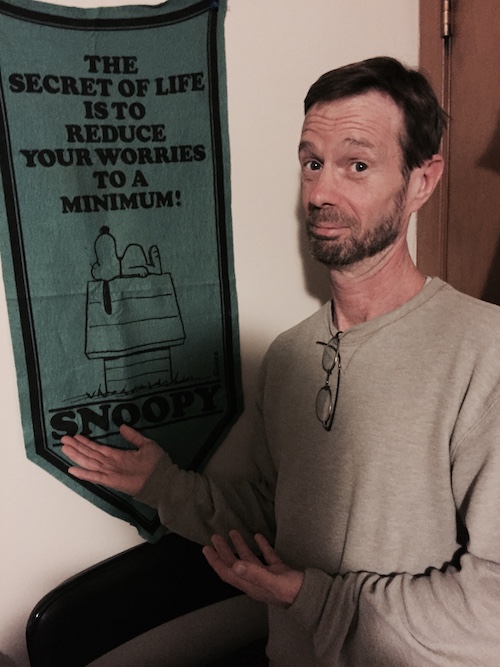 He still held onto things. There’s a bit of a hoarder mentality in our family. A common refrain from me during the last 10 years was “You still got that?” He had this blue felt Peanuts banner from the early 1970s: Snoopy on his doghouse, and the words: THE SECRET OF LIFE IS TO REDUCE YOUR WORRIES TO A MINIMUM. It was a bit ragged along the edges but for blue felt it was in pretty good shape. I thought of him, and those words, this past week when our family was going through our various COVID crises. When I got depressed about how we were screwing up Chris’s memorial, or COVID was, I’d think of Chris’ reaction. A shrug. A joke. He has a Maya Angelou quote taped to his refrigerator: “You may not control all the events that happen to you, but you can decide not to be reduced by them.” He lived that. Lose your teeth? Call your dentures “chompers.” Your mother is in a nursing home unable to speak? Visit her every Saturday and make her laugh. Bring the tuna fish sandwiches she misses and that you can eat without teeth. Take two buses to work, greet people enthusiastically. He was small but entered rooms big.
For some reason, October became the month he came out to see me in Seattle. In 2019 I took him to the local sites. We went on a hike up Tiger Mountain. This October we expanded it: The ferry over to Port Townsend. Paradise trail on Mount Rainier. It was early October and he was already buying Christmas presents.
 When I hugged him goodbye at SeaTac Airport, just 2 ½ months ago, his back was firm and strong again, and we talked about the next steps on our journey. San Juan Islands? Oregon Coast? Taiwan maybe? I’d lived there for several years and he’d never been to Asia. I liked the idea of it. If I’m honest, even into his sober stage, there was an element of indulgence in us. Who’s going to pick up Chris, who’s going to drive Chris? Where’s Chris going to spend Christmas Eve? Eventually it was like, “No, I’ll go get him. No, I’ll ride with him.” He’d become one of my favorite people. Every day, he was overcoming something bigger than anything I’d ever overcome in my life, and he was doing it with a joke and a smile. I swelled with pride and this time I wasn’t confused by it.
One more story. My wife says she could always tell when it was Chris I was talking to because of the timbre of my laughter. It was the soggy bread line. It was the trip down to Albert Lea the summer before last. This was for another memorial—Eric’s mom, Reggie—and on the way we saw a billboard for a casino: a pair of dice and in big letters the words: LIVE CRAPS. I nodded toward it and said, “That could really be misinterpretted.” Chris started riffing off that, imagining a guy who’s disappointed when he finds out it’s just gambling. He kept riffing off it, and I kept laughing. I laughed so much my stomach began to hurt and I worried I wouldn’t be right for the memorial. When I tried to relay the story to the rest of the family that night, I couldn’t even get the words out I was laughing so hard.
My shared memories with Chris are singular now, but it was nice sharing them with all of you. If anyone here has memories of Chris they’d like to share, please. Stand, sit, come to the podium, whatever you’re comfortable with. We would love to hear them.

Sunday December 03, 2023
Chris Lundegaard (1961-2023)
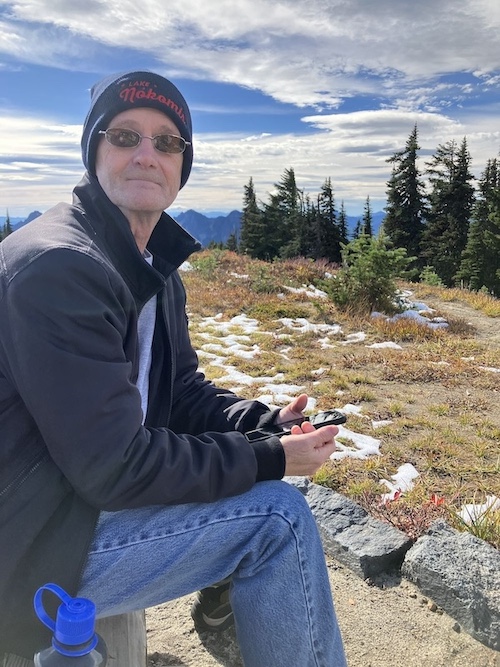
My brother Chris on the Paradise hiking trail at Mount Rainier two months ago. He was murdered at a bus stop in Edina, Minn. the evening before Thanksgiving.
- Obituary/slideshow
- Donations for a memorial bench
- A memorial service will be held December 27 at Lakewood Cemetery Memorial Chapel in Minneapolis.
More later.
Thursday May 18, 2023
Dreaming of Stopping a Crook
I was at my father's house that wasn't my father's house, doing work-work in a sideroom. But rather than work, I was doing something I shouldn't have been doing—like watching old black-and-white sitcoms at 2:00 in the afternoon, as if it were a flashback to the wasted moments of elementary school summer vacations. Then I heard someone lumbering up the stairs. Or was I imagining it? No, there was a dude standing on the landing—stouter than my father, kind of bullish, wearing an ugly suit.
“Who are you?” I said.
He said his name was Henry Hathaway. He said my father had asked him to take away some stuff.
“What kind of stuff?”
Stuff from ... the fair.
The fair? I said. The man was obviously (and ineptly) up to no good, and so I said the thing you should never say in such an instance: “I'm calling the cops.”
Then he was shooting at me. He was chasing me and shooting at me. I could see the flight paths of the bullets, like in “The Matrix,” and even though I was trying to get out of range I couldn't get out of range. I felt a slight sting at times but that was it. Was he not using bullets? Was he using some other projectile? Or did he keep missing? I made it to a secret place where I could phone the cops, but even then I couldn't remember Dad's address. Then I flashed on it. Right, of course, 5339 Emerson.
Later I was telling this story later to a group of friends and acquaintances but we kept getting sidetracked. I only ever made it to the intro of Henry Hathaway. No one ever wanted to hear beyond that point. They kept missing the whole point of the story.
Sunday September 25, 2022
We Blow
I experienced a couple of leaf blowers this weekend—one across from Scarecrow Video yesterday, the other on my usual walk to Lake Washington today—and for some reason this time they just felt like the end of everything to me. We created this device that is super-noisy, fuel inefficient and just generally inefficient, whose purpose is not to clean but to move a mess from one location (yours) to another location (theirs) while bothering as many people as possible. And these things still exist and thrive after decades. They're indicative of what we're like as a species and why we'll end.
Wednesday July 06, 2022
Dreaming of Holding Hands with Lepers
Patricia, Wendy and I were in a swanky hotel, and, at my behest, Patricia and I went up to the room of someone like Raoul, the Dutch guy I knew in Taiwan, and while he was taking a shower we ran through his room and out onto the balcony and danced in the rain. The point was to be outside and feel the rain on us. Wendy stood back in the hallway, marveling at our bravery. Except I wanted us to be stealthy. I wanted us to zip in and out without Raoul realizing we'd done it and Patricia didn't feel that way. So she didn't run back out into the hallway again with me. She stood near the bathroom door, where Raoul was taking his shower, and made a loud noise. And only then did we slam the door and run down the escalators.
There was someone who'd put up like police tape near a door in the building that led to a parking lot. It was kind of like they were marking their spot? Like a homeless person? No, it was someone I knew from elementary school and high school, Kristin G., and she was a state rep now, and whatever she ws trying to do, the attention she was trying to focus on this issue, had kind of worked. Other people were asking me to help out with the parking lot because I'd done that before—gotten people spots to park. “He works magic on this,” someone said. And I'm like ... OK? I guess? And we're walking through an upper floor of the parking garage, and the others had disappeared, and it was just me and this leper, this literal leper, who wanted to hold hands because he never got to feel human touch. And I understood what he wanted but I was also nervous. I moved my hand away from his because I didn't want to get leprosy. I felt guilty for not caring about him more.
Thursday December 23, 2021
Dreaming of Minnesota VEEPs
Here's a series of dreams from the other night—the night I was contemplating canceling our Xmas flight to Minneapolis because of the Omicron variant. And I did wind up canceling it. Going, and possibly exposing family and loved ones, felt wrong. But as soon as I canceled, not going felt wrong, too. it was wrong either way. Anyway, here's what I dreamed the night before choosing whichever wrong way.
I was at a party in the home of a successful Minneapolis couple and was hearing snippets of conversations about how such-and-such's son had received a summer internship offer from such-and-such top politician—and it wasn't even his best offer! It was people I didn't know, and didn't really care about, and I was ready to go. I was standing in the screened-in porch in my overcoat, waiting on a friend so we could leave.
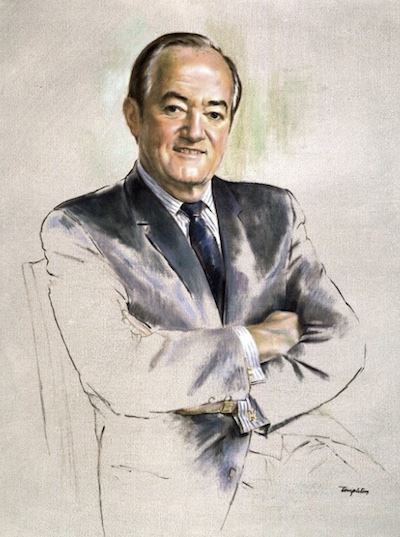 I was making small talk with the husband/father, congratulating him on something to do with his son, when I saw Hubert H. Humphrey and Walter Mondale walking up the sidewalk to the house. Humphrey seemed full of pep and vigor, like he was 1960s Humphrey, while Mondale was slow and wan, like he'd just been through, or was still going through, a grave illness. I was the first person to greet them. “Mr. Vice President,” I said to Humphrey, nodding and shaking his hand. “Mr. Vice President,” I said to Mondale, nodding and shaking his hand. I was amused by this but stumbled a bit on Mondale. Humphrey greeted me by name. “Erik!” he cried, then made small talk, to both me and the room. I was wondering, “Does Hubert Humphrey know me?” until I realized I was still wearing my nametag from a Minnesota Law & Politics event on my shirt. So did he recognize the badge? L&P? Had he been at the event, too? I asked him something about the nametag but he was dismissive. At first I thought he was dismissive of nametags but it was the coat I was wearing. It was the idea of standing there, ready to leave, without leaving.
He and Mondale entered the party, celebrities, but not quite, the old guard really. They were apart from everyone. D. was inside, too, by the dining table, being admonished by someone who was angry he'd gotten a “Jeopardy!” answer/question wrong. It was a rhyming answer. Something about “sees us” and “please us” and the answer, or question, was supposed to be “Who was Jesus?” and D. had said something like “Jesub,” so the guy was admonishing him. It was suppose to be joking, in fun, but his tone kept getting angrier and angrier, and D. didn't take it well. He was drinking coffee, and he grabbed a can of Reddi-Whip off the dining table and petulantly fitzed it into his coffee. Was he supposed to be on a diet? And this wasn't that? The angry dude was suddenly calmer: “C'mon, no need for that,” he said. He suddenly seemed the adult in the room, while D. seemed physically smaller.
I was biking with J. to some building—a room above my room, which I wanted to show her because it was so cool-looking, but how had I found it before? I was lost. J. said it must be further along so we got back on the bikepath. We were riding slowly but faster than everyone around us. Then I realized, “Wait, we've gone way too far,” and we doubled back, but now we were on a street, something like the area between Nicollet and Lyndale in South Minneapolis, like 58th, and at an intersection we came upon an old strip mall. “Have you ever seen this?” I asked. She hadn't. It was quaint, like something from the past, but not monetized quaint, just old and dim. There was a paper supply shop. I wondered: How could that still be in existence? Particularly after the pandemic. All the shops were open, but barely. There was a bookstore, and we walked down the stairs, but the front of the bookstore was simply full of colorful, sad, useless items in cellophane, sold in bundles.
Tuesday August 03, 2021
My First COVID Test
Last week I met a friend for drinks and the following morning I woke up with a scratchy throat and some shortness of breath. I felt a bit of an “uh oh” but mostly thought, “Probably from talking so much.” We'd been careful. When in the bar, ordering, we were masked, when we sat outside we were maskless, and outside we had to talk at a higher volume, which is why, I figured, my throat was a bit raw that morning.
Then my friend sent me a text saying his throat was scratchy, there was some shortness of breath, so he was going to get tested for COVID.
Fuck.
The Delta variant has been raging around the country like wildfires—which are also raging around the country—and though it's mostly striking the unvaccinated, abouot 150,000 vaccinated people have gotten it, too. Supposedly it's less deleterious for them/us. I think the vaccine basically reduces COVID to a case of the flu: You may feel bad but you won't go to the hospital. For the unvaccinated, it's worse than the original strain.
The first decision I had to make was this: Do I cancel the Mariners game that afternoon? I was going with a family friend, mid-70s, vaccinated, great, great shape, but still mid-70s. Being a worst-case scenario dude, I imagined, you know, “Dad, how did grandpa die?” “Well, son, there was this asshole named Erik who thought a baseball game was more important than Grandpa's life.” I monitored myself through the morning, didn't seem to be getting better, and sent him a text around 10 AM, canceling (I hate canceling), and offering both seats if he wanted to take his wife. Turns out she didn't like baseball, he mostly went to the game to be with me, so no sale. Or no give. These are Mariners tickets: The kind you can't give away.
I tried another friend, newly into baseball, but she, it turns out, was sick in bed with a cold. She, too, had worried it was COVID but her test came back negative.
That's when I decided to get tested. And that's when the comedy began.
My friend had been tested down at Rainier Beach, a half hour away by car, and I lived on Seattle's First Hill, commonly called Pill Hill for all the hospitals and medical facilities in the area. Surely there was something nearby. Didn't the local chain pharmacy, Bartell's, test for COVID, for example? No, they merely administered the vaccine. My wife thought they were testing down at the Convention Center, a 10-minute walk, but that was earlier in the pandemic. No more. Life was back to normal, apparently. Google searches were hugely unhelpful.
So I called my GP's office, which was right across the street. They directed me to the first floor. The place on the first floor was booked that day, and anyway it would take them 3-5 business days to get the results. I needed to know sooner, since my wife and I were meeting her family on the peninsula in a few days. “Is there a place nearby that takes walkups?” I asked. “The PolyClinic on Broadway takes walkups,” I was told. So I walked over there, found the place, asked for a test, was asked why I wanted one. When I told them, they said, “Sorry, we don't test people who exhibit symptoms.” I guess it was an immune-compromised area.
Long story slightly less long, I drove to Rainier Beach for the test. It was near a park, and the “facility” was kind of like a food truck. You gave your info to a guy at a foldout table then walked to the food truck where you were given a sterile swab, which you self-administered 10 times in each nostril and handed back. Less than 24 hours later, I had my results: “None detected.”
It is a shame that after 18 months we don't have a better system. More of a shame, of course, are all the vaccine holdouts, and the bad actors on Fox News and within the Republican party disseminating the bad information to keep them holding out. What do you do besides shake your head? They don't want to wear masks, they don't want to take the vaccine, they want everything open. What children. We should be talking about the wildfires blanketing the country in smoke. We should be talking global warming, and the slowing of the jet stream, meaning weather systems stay in the same place longer, creating, say, floods in Belgium, Germany and China, and the baking of the Pacific Northwest. But the unvaccinated take up all the oxygen.
Anyway, that was my first COVID test. I doubt it'll be my last.
Monday June 14, 2021
My Taiwan Movie
You know those company ice-breakers where you‘re supposed to go around the room and tell colleagues something about yourself they don’t know? I usually go with this one: “I was in a 1988 Taiwanese kung-fu comedy. It was called ‘Wan nung yuandong yuen’ and I played a hui waiguoren, or bad foreigner. In a bar fight, I get a bottle broken over my head by Hu Gua, the Johnny Carson of Taiwan TV.”
 With a good crowd, it usually gets follow-ups:
- No, I don't know kung fu or any martial art. I'm almost defenseless, really.
- My Chinese is so-so. It was better then.
- The bottle was a breakaway, not a real one, but yes it hurt a little.
- No, the movie wasn't a big hit. Most Taiwanese probably haven't heard of it. Most Taiwanese at the time probably never heard of it.
As for how I got involved? I had a lot of foreign friends—meaning western friends—at National Taiwan Normal University, or Shi Da, and someone at the school was contacted by someone at the movie studio, asking for foreigners, and I was invited along for the ride. I think we did all the filming over two nights, 9 PM to 5 AM or something. We had a few westerners—or maybe just one?—who knew martial arts, but he injured his foot during filming. As for why I had the honor of getting the bottle broken over my head by Hu Gua? Earlier, I was asked to do a scene where I got punched and I was supposed to fall backwards and I went all in, slamming myself against the ground. So much so they were momentarily worried about me. After that, they probably thought, “This idiot would probably be good for the bottle-breaking scene.”
Basic premise: An international sports competition takes place in 1920s China, and we‘re the pushy foreign athletes who invade a local bar one night. I show up about 18 seconds in on the left side of the screen. Hu Gua is the guy in the Boy Scout outfit who tries to keep the two sides from fighting by, among other things, quoting Confucius: <<有朋自远方来, 不亦乐乎?>> Translation: “When friends come from far away, it is indeed a pleasure.” I heard that quote a lot, actually. The Chinese were always saying it to make sure you never picked up a check.
When I returned from Tawain in 1988, I brought a VHS copy of the film to show family and friends. A few years ago, along with some other analog items, I brought it to a digital transfer station in Queen Anne so they could make a DVD of it. Then I posted that scene to YouTube.
OK, drumroll...
Yeah, the subtitles needed work.
For some reason, IMDb calls the film “Kung Fu Kids Part V” but it's definitely not No. 5 of anything. Its Chinese title translates to “Almighty Athletes” or literally: “10,000 Able to Do Exercises People.” No five anywhere.
Oh, and the Chinese misfits won the international sports competition. 當然。
Here are some photos from back in the day.
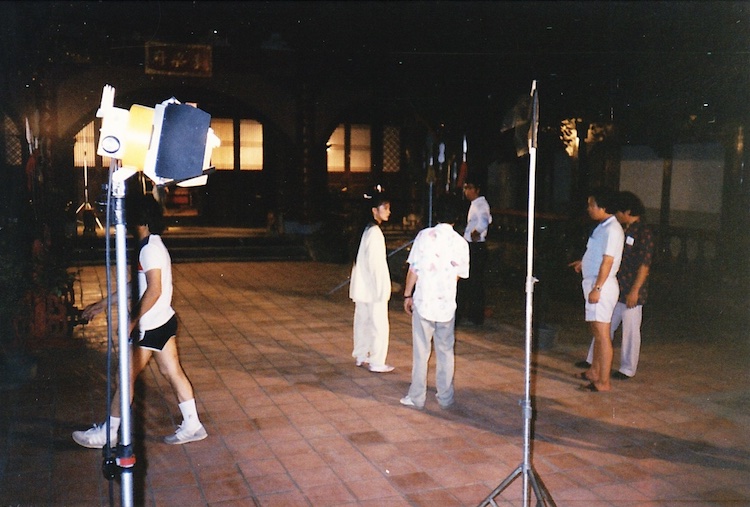
I vaguely remember waiting outside Shi Da with the others and being driven (in a van?) to the movie studio on the outskirts of Taipei at about 11 PM. The above—an older period piece, a western—was being filmed as we arrived. There was no “Quiet on the set!” because they shot without sound and dubbed later.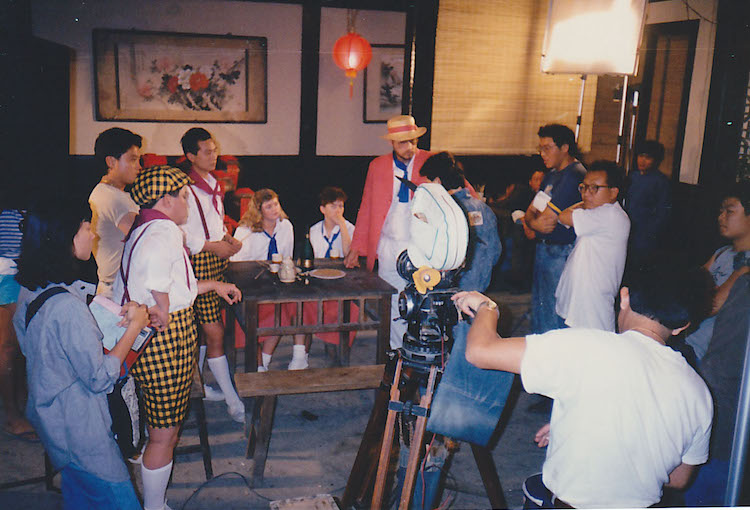
The young Chinese guy tries to hit on the western girls until the big guy on the right objects. His name is Bobby, to which the Chinese guy says “Bo pi? Wo ye yo.” “Foreskin? I also have.” It was that kind of “Benny Hill” humor.

Here's the western kid who knew his stuff. He looks morose because he'd just injured his foot. The career that got sidetracked.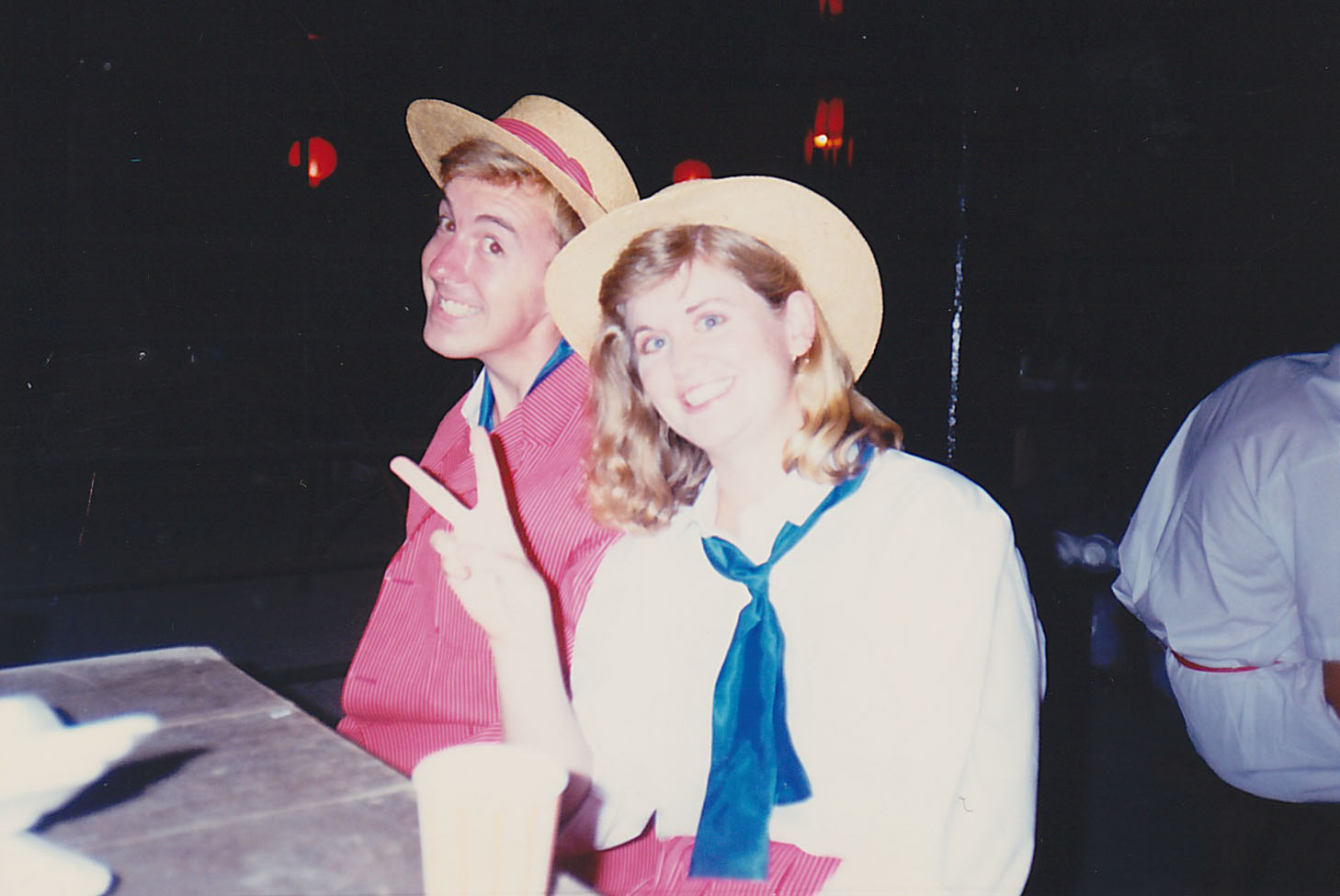
The peace sign is a gesture Chinese girls often made. It didn't mean peace; it was just something cute to do.
Getting the run-through for my 15 seconds of fame.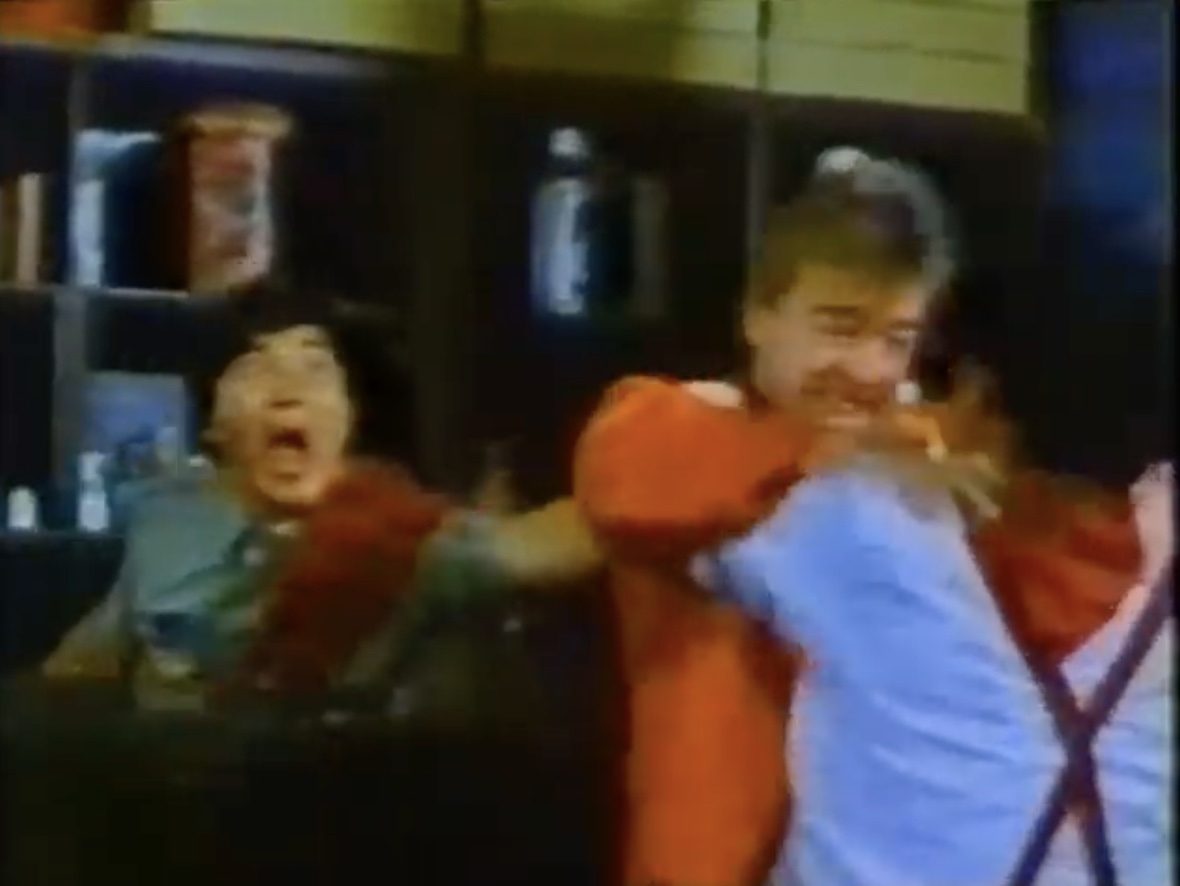
Here's the grainy video version before the bottle is broken. We had to do it twice because the first time the bottle didn't break properly on the first swing. So Hu Gua actually hit me in the head with a bottle three times.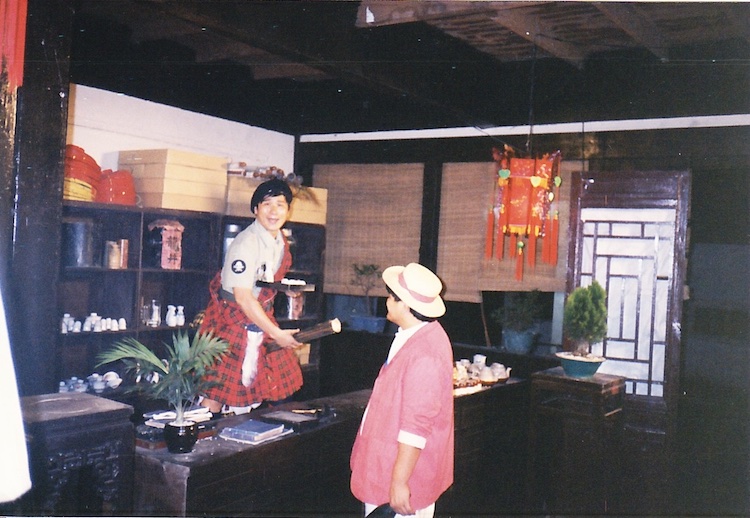
Hu Gua clowning around on set. Nice to hear he's still doing well.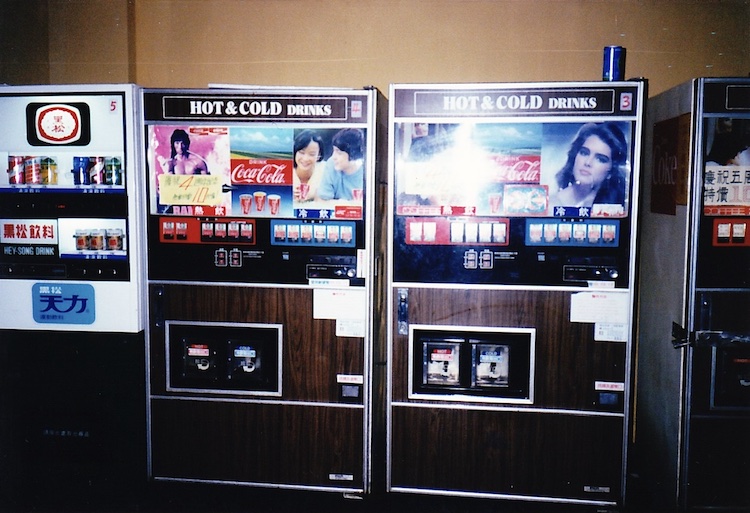
A common sight: western soft drinks being sold with images of western stars. Wonder who the western stars would be today? Probably K-Pop stars.
Near the end of a long night.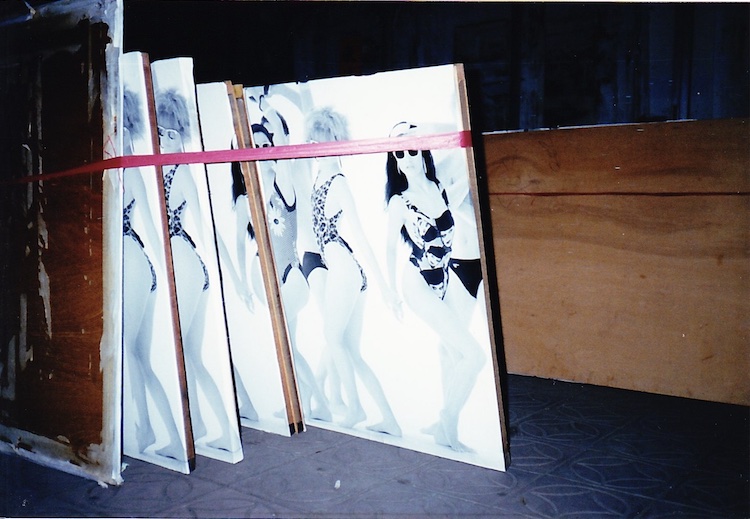
I have such a vivid memory of this: Being dropped off on the streets of Taipei at about 5 AM as everything was waking up. These were outside a store waiting to be brought in.
And here it is. The guy with the elongated arms, Bong Cha Cha, was my favorite. He had a Joe E. Brown quality to him.
I miss all that. I miss not knowing where life is going to take you.
Tuesday June 08, 2021
Masked
Quick vignette. The other night, I was rushing to keep an appointment at a restaurant—about the fourth time I'd been to a restaurant since things began opening up—when I realized I'd lost my mask en route. These days, walking around Seattle, I mostly keep my mask around my wrist just in case I need it, and it wasn't there. Could I have dropped it? I looked at the sidewalk behind me. Nothing. I was beginning to head back home, knowing I needed the damn thing to get into the restaurant, and knowing all of this would make me even later than ever, when I finally figured it out: I was wearing it.
It's the pandemic equivalent of searching for the glasses that are perched atop your head. I guess it means I'm really used to wearing these things.
Thursday December 31, 2020
The One Good Thing of 2020
My last post before 2020 was this one saying goodbye to the 2010s, which I called, with a nod to Garry Trudeau, “a kidney stone of a decade.”
I guess I didn't know from kidney stones.
If you'd told me on Dec. 31, 2019 that Joe Biden would defeat Donald Trump in the 2020 presidential election, I would've assumed a good year. I might've said, “As long as I get that, I'm good.” And on some level I am. Nothing mattered more than that, and we did it. We got rid of the fucker. Even if he's still fighting it and trying to undermine the fundamentals of American democracy. Even if his minions and would-be successors do the same. In fact, everything he and they do show the wisdom of the 81 million and the idiocy of the 74. I can't wait until he's swept away. I want to see him thrash.
But just imagine if you'd told me, a year ago today, about some of the other numbers for 2020. That the big box-office hit would be “Bad Boys for Life” at $206 million (the lowest total since 1995); the homerun leader would be Luke Voigt with 22 (the lowest since 1918); and the U.S. medal count during the Summer Olympics would be zero. I'd wonder what the hell was going on. What disaster had happened.
And it has been. But in many ways, the numbers will be worse in 2021. A bill is coming due and we don't know how large it is. At some point, the moratorium on evictions will end and we don't know what that will look like. How many stores are going away forever? How many restaurants? How many businesses will decide that the overhead of an office isn't worth it, that all their employees can work from home? What will this mean? Could we somehow turn abandoned office buildings into shelters for the homeless and the recently evicted? Walkability used to be an important measure in a home's desirability. Will that be true on the other side of the pandemic? If you can work 30 miles or 100 miles or 3,000 miles from your workplace—assuming there is a “work place”—why battle high rents and traffic jams?
Last August, for my day job, I interviewed a bankruptcy attorney out of Lexington, KY. This is part of that conversation:
What else is coming your way?
A lot more of business closures—hospitality industry and restaurants that have had to issue letters to creditors saying they had to shut down, and they didn't have the assets to even file a bankruptcy. That's been the bulk of my practice the last couple of months. It's been hotels, it's been restaurants, event venues. A couple of newspapers.
How bad is it? How screwed are we?
We are so screwed. My calls used to be talking to people about whether they should file a Chapter 11, a 7, or what would be the best relief for their business. Now, I'd say at least five clients a month come to me where I just shut their businesses down because they're beyond resuscitation.
Closure is really no different than a Chapter 7. The reason why you don't file a Chapter 7 is because, with these places I'm representing, there's a bank that has a lien on all of their assets. So I usually just call up the bank and say, “They're not going to make it. Come get your stuff at this location.” Then I send letters to all of their vendors and employees and whoever else that isn't going to get paid, and I tell them, “We had to close our doors. You're not going to get your money. The bank got everything.”
The real impact, the rash of bankruptcy filings, I think that's not going to happen until next year. There's still money out there circulating from the PPP loans, stimulus checks. Landlords were forgiving rent because they were getting their mortgages forgiven by the banks for a three-month period.
So your assumption is that there's another shoe that's going to drop, and it's going to be a big one?
Yes. That's what I've been trying to gear up for because I know it's coming.
At least we'll have a working president who will look beyond his own ego. At least we'll have that. Thank you, 2020, for that one thing.
All previous entries

Baseball's Active Leaders, 2023
What Trump Said When About COVID
Recent Reviews
Everything Everywhere All at Once (2022)
Black Panther: Wakanda Forever (2022)
Doctor Strange in the Multiverse of Madness (2022)
Spider-Man: No Way Home (2021)
The Cagneys
A Midsummer Night's Dream (1935)
Something to Sing About (1937)
Angels with Dirty Faces (1938)
A Lion Is In the Streets (1953)
Man of a Thousand Faces (1957)
Never Steal Anything Small (1959)
Shake Hands With the Devil (1959)